Table of Contents
1. Introduction
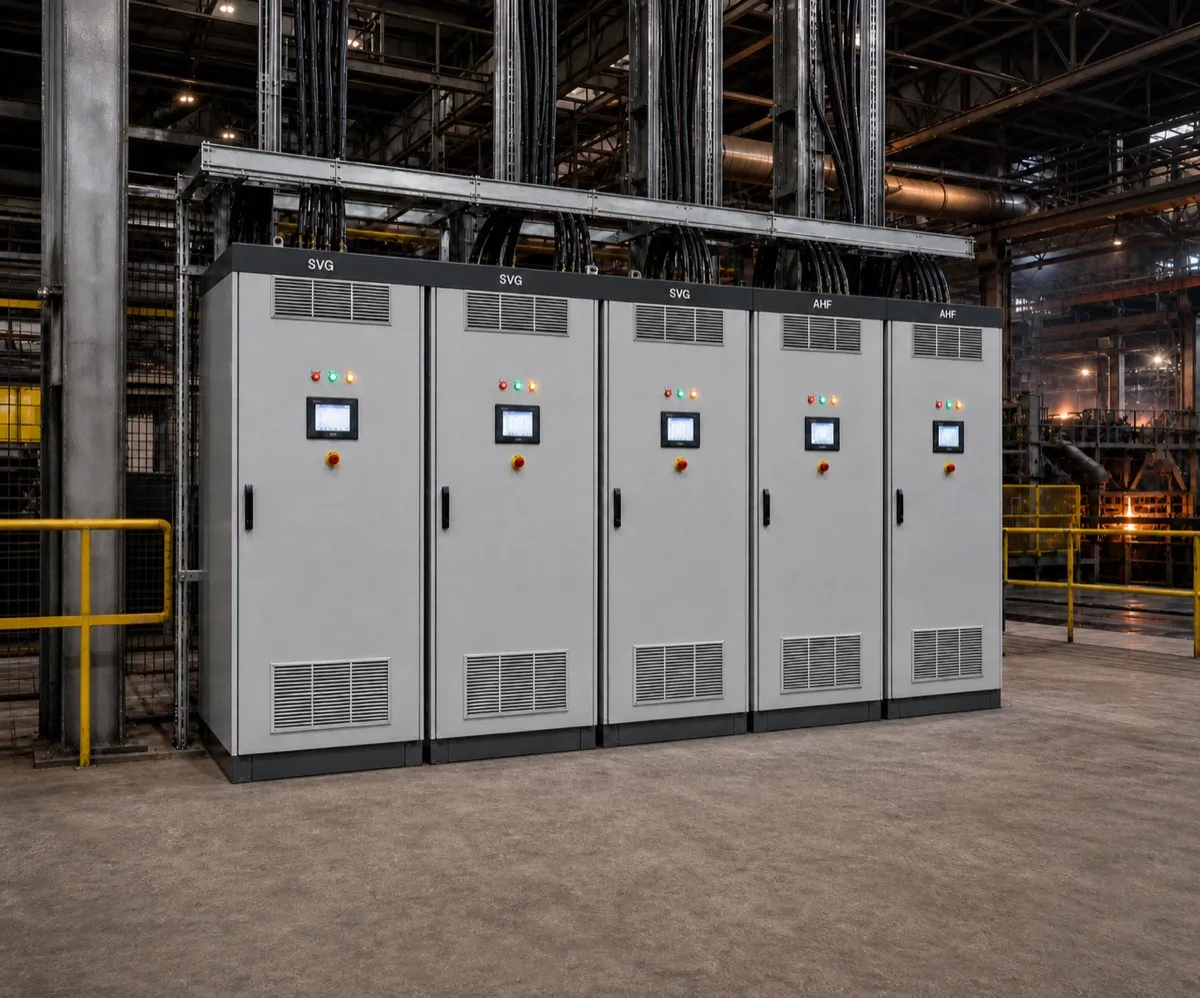
Power quality issues can significantly disrupt the efficient operation of electrical systems. Problems such as voltage sags, harmonics, and flicker affect performance, equipment lifespan, and can lead to unexpected downtime. Static Var Generators (SVGs) have emerged as essential solutions, providing reactive power support that stabilizes voltage levels and improves overall power quality. In this article, we will explore common power quality problems and elucidate how SVGs effectively address these challenges.
2. Common Power Quality Problems
2.1 Voltage Sags
Voltage sags are short-duration decreases in voltage levels, often caused by large equipment starting or faults in the supply system. These disturbances affect sensitive electronic loads, causing them to malfunction or shut down.
2.2 Harmonics
Harmonics arise from non-linear loads such as LED lighting and computer power supplies, leading to distortion in the voltage waveform. High levels of harmonics can cause overheating and premature equipment failure.
2.3 Voltage Flicker
Voltage flicker is a rapid variation in voltage levels, primarily due to fluctuating loads. This issue creates discomfort for users and can lead to malfunctioning of sensitive devices.
2.4 Transients
Transients are sudden voltage spikes resulting from lightning strikes, switching events, or faults. These high-energy disturbances can damage electrical equipment.
2.5 Brownouts and Blackouts
Brownouts involve prolonged voltage reductions, while blackouts result in total power loss. Both scenarios can severely impact operations in commercial and industrial settings.
3. How Static Var Generators Remedy These Issues
3.1 Mitigating Voltage Sags
Static Var Generators provide real-time reactive power support, stabilizing voltage levels during disturbances and preventing outages in sensitive equipment.
3.2 Reducing Harmonics
SVGs can filter out harmonic distortions by actively adjusting reactive power, thereby improving power quality and efficiency.
3.3 Addressing Voltage Flicker
By rapidly adjusting reactive power output, SVGs stabilize voltage fluctuations, ensuring consistent power delivery to sensitive devices.
3.4 Handling Transients
Static Var Generators can absorb transient surges, thus protecting equipment from potential damage due to voltage spikes.
3.5 Preventing Brownouts and Blackouts
SVGs enhance the stability and reliability of power systems, making them less susceptible to brownouts and aiding recovery from blackouts.
4. Case Studies and Data Analysis
This section will highlight real-world examples of SVG implementations and their successful mitigation of power quality issues.
| Power Quality Issue | SVG Investigation | Outcome |
|---|---|---|
| Voltage Sag | Installed SVG to provide dynamic reactive power | Halted disruptions for a manufacturing plant, enhancing efficiency by 30% |
| Harmonics | SVG coupled with harmonic filters | Reduced harmonic distortion by 20%, prolonging equipment life |
| Voltage Flicker | SVG deployed at a fluctuating load site | Consistent voltage maintained; user satisfaction increased |
5. Conclusion
Static Var Generators offer effective solutions to numerous power quality problems faced by industries today. By addressing issues such as voltage sags, harmonics, and flicker, SVGs help maintain stability in electrical systems, improving operational efficiency and safeguarding equipment. Companies looking to enhance their power quality should consider implementing SVGs as a proactive measure for reliability.
For more information on Static Var Generators and their benefits, visit us at 2. Common Power Quality Problems5 Power.