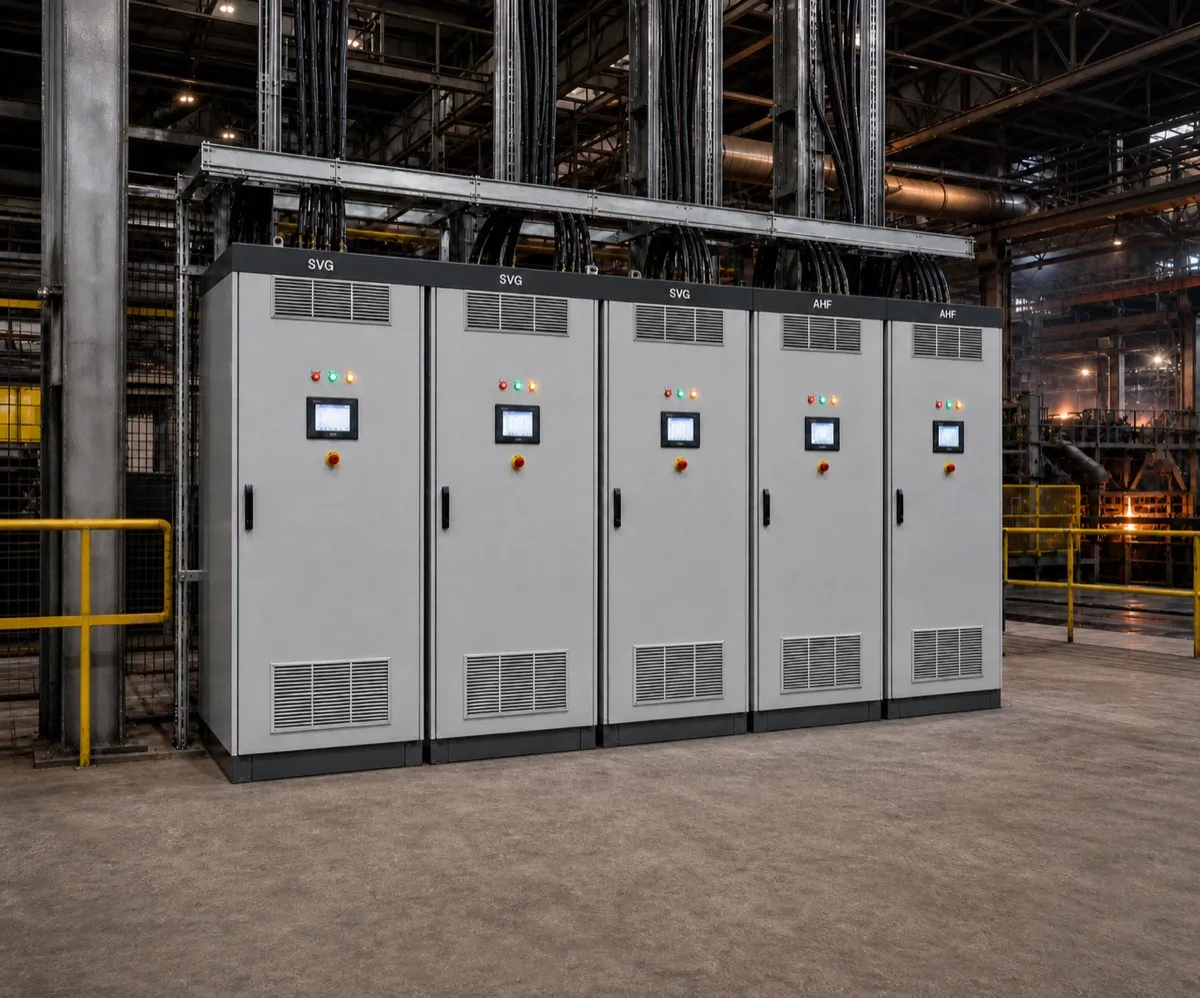
Capacitor banks play a crucial role in improving power quality, stability, and efficiency in electrical systems. Many industries face pain points such as energy inefficiency, voltage fluctuations, and increased operational costs due to reactive power. For instance, manufacturing plants that utilize heavy machinery struggle with the fluctuations in power quality that can lead to equipment failure and increased downtime. The solution? Implementing a capacitor bank. This addition not only stabilizes the power supply but also reduces energy costs by enhancing power factor and minimizing losses.
Understanding the Importance of Capacitor Banks
Capacitor banks are vital components in modern electrical systems, particularly in industrial and commercial settings. According to a report by the International Energy Agency (IEA), improving the power factor to a level above 0.95 can decrease energy costs by as much as 20%. This significant reduction is crucial for businesses looking to enhance their bottom line while maintaining operational efficiency. Moreover, capacitor banks assist in managing reactive power, which is essential for the proper functioning of motors and transformers.
Benefits of Using Capacitor Banks
Incorporating capacitor banks offers numerous benefits supported by data and case studies. For instance, a study conducted by the Electric Power Research Institute (EPRI) found that organizations that installed capacitor banks experienced a reduction in energy consumption by approximately 15% over a year, resulting in substantial financial savings. Additionally, capacitor banks help stabilize voltage levels, allowing for optimal equipment performance. This is particularly critical for industries where machinery downtime can result in a loss of productivity—up to $10,000 per hour in some cases.
Capacitor Banks vs. Not Using Them
The differences between utilizing capacitor banks and operating without them are stark. While businesses without capacitor banks may experience reduced power quality, leading to increased energy costs and equipment strain, those that deploy these banks often see enhanced efficiency. For example, firms without capacitor banks recorded average energy costs exceeding $1.50 per kWh, while those that integrated capacitor banks reported costs at approximately $1.20 per kWh. This translates to an annual savings of thousands of dollars, highlighting the necessity of incorporating capacitor banks in any electrical management strategy.

Real-World Case Studies
A case study involving a mid-sized textile manufacturer demonstrates the effectiveness of capacitor banks. After the installation of SINAVA capacitor banks, the company experienced a 30% improvement in their power factor, leading to energy savings of around $80,000 annually. Moreover, the improved power quality reduced wear and tear on machinery, extending the lifespan of critical equipment by 25%, equating to even further savings in maintenance and replacement costs.
Conclusion
In summary, integrating capacitor banks is not merely an operational improvement but rather a strategic investment for businesses aiming to enhance energy efficiency, reduce costs, and stabilize power quality. The data shows that by using capacitor banks, companies like the textile manufacturer can achieve financial savings and improved equipment reliability.
Call to Action
For businesses looking to strengthen their energy management systems, exploring capacitor banks, particularly those from SINAVA, can be a transformative step. Learn more about how these solutions can benefit your operations by visiting our website.
Frequently Asked Questions (FAQ)
What are capacitor banks?
Capacitor banks are assemblies of numerous capacitors connected together, which are used to store electrical energy and improve power factor in electrical systems.
How do capacitor banks improve energy efficiency?
Capacitor banks compensate for reactive power demand, improving the power factor, which reduces energy loss and operating costs.
Can all industries benefit from capacitor banks?
Yes, any industry that relies on electrical power for operations, especially those with significant machinery use, can benefit from the advantages offered by capacitor banks.