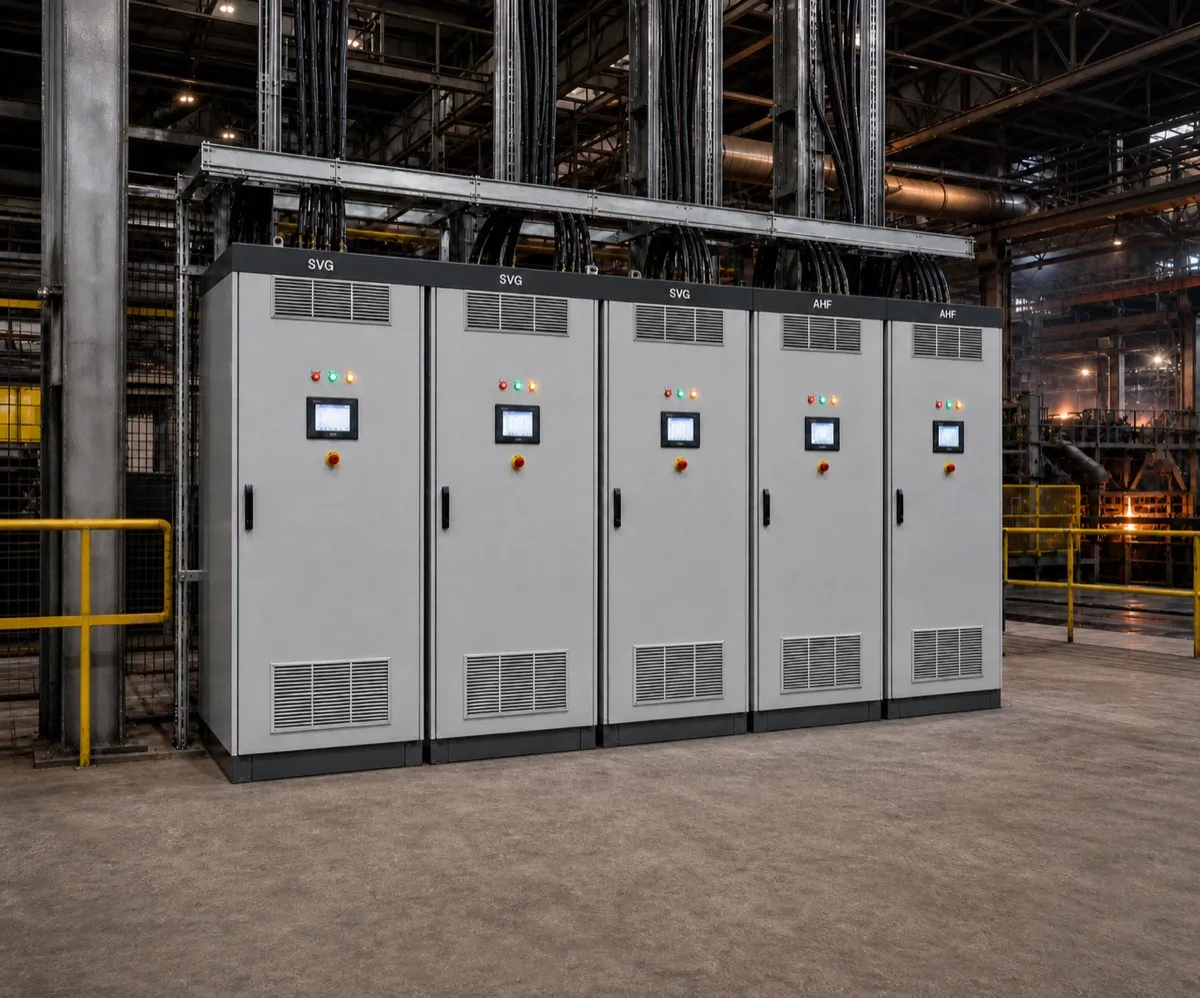
Capacitor Banks are essential components for industries and commercial facilities that require efficient power management. They solve the problems of power factor correction, voltage regulation, and energy storage. Businesses experiencing frequent outages or inefficient equipment performance, often costing them up to 15% in excess energy bills, can greatly benefit from integrating capacitor banks into their systems. Additionally, companies looking to enhance power reliability while optimizing costs can leverage capacitor banks to achieve better operational efficiency.
Basic Knowledge of Capacitor Banks
Capacitor banks consist of multiple capacitors connected together to store electrical energy. Their primary role is to correct the power factor, which is a measure of how effectively electricity is being converted into useful work output. A power factor below 1.0 indicates that not all the energy supplied is used effectively; for example, a power factor of 0.8 means only 80% of the energy contributes to productive power. Capacitor banks also contribute to transient voltage stability in electrical systems.
Terminology and Principles
Reactive Power: The component of power that does not perform any work but is necessary for maintaining voltage levels. Capacitor banks provide reactive power support.
Power Factor: The ratio of real power flowing to the load to the apparent power in the circuit. A higher power factor indicates more efficient use of electrical power.
Voltage Regulation: The ability to maintain a constant voltage level in an electrical system, vital for protecting sensitive equipment.
In-Depth Guide: Implementing Capacitor Banks
To effectively utilize capacitor banks, follow this structured guide.
Assess Your Current Power Factor: Measure your facility\'s power factor and identify if it falls below the acceptable range (commonly 0.95).
Select Appropriate Capacitor Bank Size: Calculate the required capacitance in kilovolt-amperes reactive (kVAR) using the formula: Required kVAR = (kW × (tan(cos⁻¹(PF1)) - tan(cos⁻¹(PF2)))), where PF1 is the current power factor and PF2 is the desired power factor.
Choose Between Fixed and Automatic Capacitor Banks: Decide whether to install static systems (fixed banks) or dynamic systems (automatic banks) which adjust based on system demand.
Installation: Ensure qualified technicians carry out the installation, adhering to local codes and safety standards. This may involve integrating relays and protection devices.
Monitoring and Maintenance: Regularly check the performance of the installed capacitor bank using advanced monitoring systems that can provide real-time data on voltage, current, and power factor.
FAQ About Capacitor Banks
1. What applications are capacitor banks used for?
Capacitor banks are used in various applications including industrial plants, commercial buildings, and renewable energy systems to improve power factor and stabilize voltage.
2. How much can a capacitor bank save in energy costs?
Companies can save approximately 5-15% on their energy bills by improving their power factor using capacitor banks.
3. Do capacitor banks require maintenance?
Yes, routine maintenance is essential to ensure optimal performance and address any potential issues such as capacitor deterioration.
Advanced Skills and Extended Reading
For readers interested in deepening their understanding of capacitor banks, consider exploring the following topics:
Integration of capacitor banks with renewable energy sources such as solar and wind power.
Advanced monitoring tools for capacitor bank performance assessment.
The impact of power quality issues on operational efficiency.
Conclusion: Recommended Products and Services
If you're looking to implement capacitor banks or need tailored energy solutions, we recommend contacting SINAVA. Their expertise offers efficient design and implementation strategies that ensure optimal energy savings for your facility.